The FBAR deadline is one of the few pieces of US tax administration that is genuinely simple, and it still catches people out. Not because the date is complicated, but because of how the extension works.
The dates
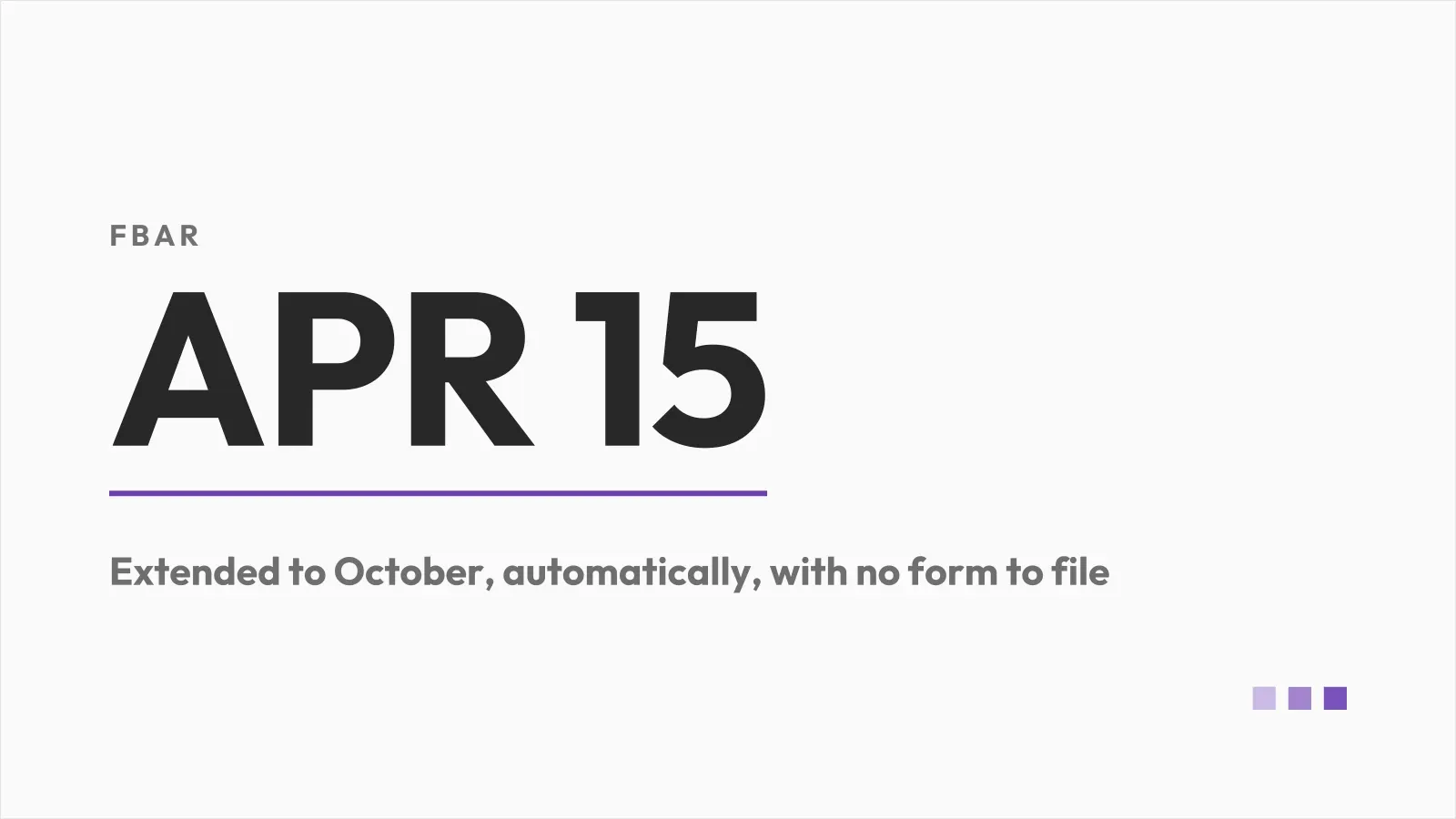
FBAR, meaning FinCEN Form 114, is due April 15, and it carries an automatic extension to October 15.
Automatic means exactly that. You do not file a request. There is no form. There is no box to tick. If your FBAR arrives in September, it is on time, and nobody had to be told in advance.
That alignment with the income tax deadline is deliberate, but the two are still separate filings going to separate places. Extending your tax return does not extend your FBAR, and it does not need to, because the FBAR extension is already there.
Why an automatic extension causes problems
An extension that requires no action is an extension that generates no paper trail and no reminder.
The pattern we see is this. Someone realises in April that they might have an FBAR obligation. They read that the deadline is extended to October, they relax, and October arrives while they are thinking about something else. Nothing prompted them, because nothing was ever filed.
Compare that to a tax extension, where the act of filing the extension itself creates a record and usually a note in someone's calendar. FBAR gives you six extra months and no string around your finger.
So we treat April 15 as the working deadline and October as the safety margin it was intended to be, rather than the plan.
What the deadline actually applies to
The year you are reporting is the calendar year, regardless of what your business year looks like. The April 15 due date in any given year covers the previous calendar year's accounts.
That trips up people whose company runs on a different fiscal year, and people who moved country mid-year and think in terms of tax years rather than calendar years. For FBAR, it is January to December, every time.
And the figure you report is not the closing balance. It is the highest balance each account reached during that calendar year, which is the point covered in FBAR filing: the key points.
What if you are already past October 15
Then you are late, and late is a different conversation, not a disaster.
The important thing is that there is a defined route for people in this position, and that using it voluntarily is materially better than waiting to be contacted. The route depends on one question: whether there is unreported income behind the unreported account, or whether the income was always properly declared and only the report was missed.
Those two situations get handled differently. We walk through both in you missed FBAR: here is the path back.
A note on getting it filed
FBAR is filed electronically through the BSA E-Filing system. If you are filing for a spouse as well, or someone is filing on your behalf, there is an authorisation step that people routinely discover at the last minute.
That is another argument for April over October. Discovering an administrative snag in April leaves you six months. Discovering it on October 14 leaves you a day.
Not sure which years you actually owe, or whether an old account counts? Describe your situation and we will tell you what applies.
Thresholds, deadlines and penalty amounts change every filing year. This guide is reviewed against the current year, and it is educational rather than advice about your own situation. Before you act on anything here, check it with us.